High-Protein Foods for GLP-1: A Practical Guide
When appetite is smaller, every bite tends to count more. Here's a friendly list of high-protein foods to keep on hand, plus easy habits that can help you work toward your protein goals without forcing it.
· Educational content — not medically reviewed
The short answer
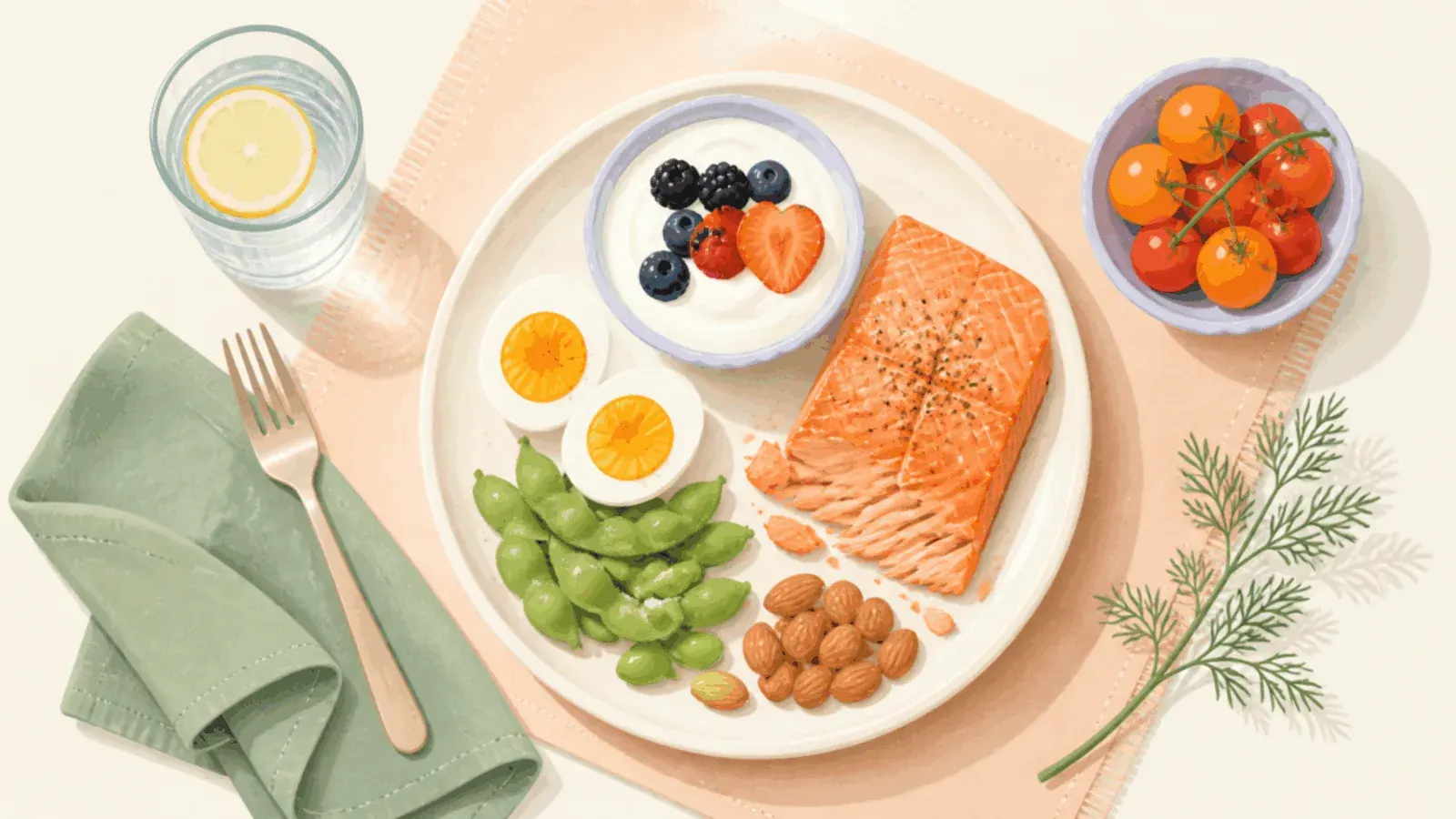
High-protein foods for GLP-1 users need to be dense, easy, and gentle, because appetite is small. Reliable staples: Greek yogurt, cottage cheese, eggs, chicken or turkey, fish and canned tuna, tofu and edamame, lentils, and ready-to-drink protein shakes for days when chewing feels like effort. Eating the protein portion of a plate first is the single simplest habit. Personal targets vary — ask a provider or dietitian.
Key takeaways
- When appetite is low on a GLP-1, protein often gets crowded out first, so many people find it helps to eat the protein part of a meal before anything else.
- There is no single right protein number for everyone. What's appropriate depends on your body, health, and goals, which is why it's worth discussing a target with your healthcare provider or a registered dietitian rather than following a one-size-fits-all figure.
- Lean on high-protein foods you actually enjoy and tolerate, such as eggs, Greek yogurt, cottage cheese, fish, poultry, tofu, beans, edamame, and protein-fortified staples.
- Small, frequent protein touches throughout the day are often easier to manage than one large meal when fullness hits quickly.
- GLP-1 Tracker's AI photo meal logging estimates protein per meal, so you can see how your day is adding up without manual entry.
Protein-first, simply
Reaching for protein early in a meal is an easy habit to build when your appetite feels smaller. The app keeps your daily protein total front and center so you can see where you stand at a glance.
Snap a photo, see the numbers
Log meals with an AI photo scan that estimates calories, protein, and fiber. No weighing or hunting through databases, just a quick picture to help keep your day organized.
Goals that fit your day
Set a daily protein target and watch your progress fill in as you eat. It's a gentle, visual way to stay organized rather than guessing.
Otis cheers you on
Our otter mascot Otis keeps things warm and encouraging, celebrating streaks and steady habits so tracking feels less like a chore.
Why protein matters more when appetite is lower
Many people taking GLP-1 medications, including brands such as Ozempic, Wegovy, Mounjaro, Zepbound, Rybelsus, and Saxenda among others, notice that their appetite feels smaller and that meals fill them up faster. That can make it harder to fit in enough protein across the day, simply because there's less room at each sitting.
Protein is one of the building blocks your body uses every day, and it tends to be filling and satisfying. When you're eating less overall, being a little intentional about protein can help your meals feel complete. This is general wellness information, not medical or dietary advice. Your healthcare provider or a registered dietitian can help you set protein targets that are right for you.
GLP-1 Tracker visualizes your estimated medication level over time.
A practical list of high-protein foods
You don't need anything fancy. These everyday options are easy to keep on hand and work well when portions are small:
Animal-based: chicken breast, turkey, lean beef, pork loin, eggs and egg whites, fish like salmon and tuna, shrimp, Greek yogurt, cottage cheese, and milk.
Plant-based: tofu, tempeh, edamame, lentils, chickpeas, black beans, green peas, and seitan. Nuts, seeds, and nut butters add protein too, though they're calorie-dense, so a little goes a long way.
Convenient extras: a protein shake or ready-to-drink protein beverage, jerky or roasted edamame for snacks, and protein-fortified pasta or bread. When a full plate feels like too much, a smaller protein-rich snack can be an easy win.
Easy ways to work toward your protein goal
Try the protein-first habit: at each meal, eat your protein before filling up on everything else. Since GLP-1 medications can leave many people feeling satisfied sooner, leading with protein can help the most important part of the plate get eaten first.
Spreading protein across the day rather than saving it all for dinner is another approach some people find helpful. A protein-forward breakfast, a protein snack, and protein at lunch and dinner are often easier to manage than one large serving. Keeping quick options ready, like pre-cooked chicken, hard-boiled eggs, or yogurt cups, removes some of the friction on busy days.
In GLP-1 Tracker, you can set a daily protein goal and log meals by snapping a photo. The AI scan estimates protein, calories, and fiber, and your running total updates so you can always see how close you are. Over time, your logged meals along with your weight, BMI, and progress photos sit together in one place, making it simpler to stay consistent and notice what's working for you.
Spreading Protein Across the Day Instead of Loading One Meal
When fullness arrives quickly, a single large protein-heavy plate can feel impossible to finish. Many people find it easier to spread protein across several smaller touches: a few bites of Greek yogurt or cottage cheese in the morning, a handful of edamame or a string cheese midday, a palm-sized portion of fish or chicken at dinner, and a protein-fortified snack in between. Smaller, repeated servings can add up to a meaningful daily total without the pressure of clearing a full plate at once.
Some people also find it helps to eat protein earlier in the day, when appetite is sometimes a little more cooperative. GLP-1 Tracker lets you log meals throughout the day with AI photo estimates, so you can glance at your running protein total and notice where there's still room before the day ends, rather than discovering a shortfall at bedtime. What works best varies from person to person, so it's worth paying attention to your own patterns.
Building a Protein Habit Around Texture and Appetite Changes
Tastes and tolerances can shift while on a GLP-1, and a food you loved last month might feel less appealing now. Some people gravitate toward softer or cooler protein sources, like blended cottage cheese, scrambled eggs, fish, soups with beans or lentils, or smoothies, when denser meats feel like too much. There's no wrong choice here; the best protein is the one you can comfortably eat and keep eating.
Keeping a few reliable, easy-to-grab options on hand removes friction on low-appetite days. Logging which foods sat well and which didn't, alongside meal photos in GLP-1 Tracker, helps you spot your personal patterns over time so you can lean on the protein sources that consistently work for you. If appetite changes, nausea, trouble eating, or other symptoms become persistent or concerning, that's worth raising with your healthcare provider. This isn't a complete list of possible symptoms, and your provider can speak to your situation.
Frequently asked questions
How much protein should I aim for on a GLP-1?
There's no single number that fits everyone. Protein needs vary based on your body, activity, and health, so the best approach is to ask your healthcare provider or a registered dietitian for a target that suits you. Once you have a goal, you can set it in the app and track toward it each day.
What are the easiest high-protein foods when I'm not very hungry?
Quick, low-effort options tend to work best: Greek yogurt, cottage cheese, eggs, a protein shake, edamame, or a few slices of deli turkey or chicken. Smaller protein-rich snacks can be easier to finish than a full plate when your appetite feels low.
What does 'protein-first' mean?
It simply means eating the protein on your plate before the rest of your meal. Because GLP-1 medications can make many people feel full sooner, leading with protein can help you get it in before you run out of room. It's a habit, not a rule, and you can adjust it to what feels comfortable for you.
Can the app tell me how much protein is in my meal?
You snap a photo of your meal and the AI scan estimates protein, calories, and fiber for you. It's designed to be quick and to keep your daily protein total visible, so you don't have to weigh food or search a database. These are estimates to help you stay organized, not exact lab measurements.
Are protein shakes a good option?
Many people find shakes a convenient way to add protein, especially when a full meal feels like too much, and they're easy to log in the app. Whether a particular product fits your needs is a good question for your healthcare provider or dietitian.
Does the timing of when I eat protein matter?
There isn't one perfect schedule, and what works best is personal. That said, many people find it easier to get protein in earlier in the day, when appetite tends to be a bit stronger, and to spread it across a few smaller servings rather than relying on one big meal. Experimenting with timing and noticing what feels comfortable is reasonable. GLP-1 Tracker makes it easy to see how your protein adds up across the day so you can adjust your routine to fit your appetite. For guidance tailored to you, a healthcare provider or registered dietitian is a good resource.
What if I struggle to hit my protein goal most days?
It's common to fall short some days, especially when appetite is low, and one off day generally isn't something to worry about. Focusing on small, easy wins, like adding a protein-fortified yogurt, a scoop of protein powder, or a handful of edamame, often closes the gap more comfortably than trying to eat a large meal. Tracking your daily protein in GLP-1 Tracker can reveal trends over time, and if you're consistently struggling to eat enough, a healthcare provider or registered dietitian can offer guidance tailored to you.
Is plant-based protein a good option on a GLP-1?
Plant-based proteins like tofu, tempeh, edamame, beans, lentils, and soy or pea-based products can absolutely be part of the mix, and many are gentle and easy to eat. Some people find legumes a little harder to digest, so it can help to introduce them gradually and notice how you feel. The right approach depends on your preferences and tolerance. You can log plant-based meals in GLP-1 Tracker and use the protein estimates to see how they contribute to your daily total.
Work toward your protein goals with a little help from Otis
Download GLP-1 Tracker to log meals with a photo, watch your daily protein add up, and keep your medication log, weight, and progress organized in one calm place.
Reading on a desktop? Scan to open it on your iPhone.apps.apple.com/app/id6765520636
This page is for general education only and is not medical advice, diagnosis or treatment. GLP-1 Tracker is a tracking tool, not a medical device. Always consult your healthcare provider about your medication, dosing and health decisions. Brand names are trademarks of their respective owners and are not affiliated with this app.