What to Eat on a GLP-1
Your appetite may feel different now, and that's okay. Here's a calm, practical way to think about eating well on a GLP-1 so the food you do eat works a little harder for you.
· Educational content — not medically reviewed
The short answer
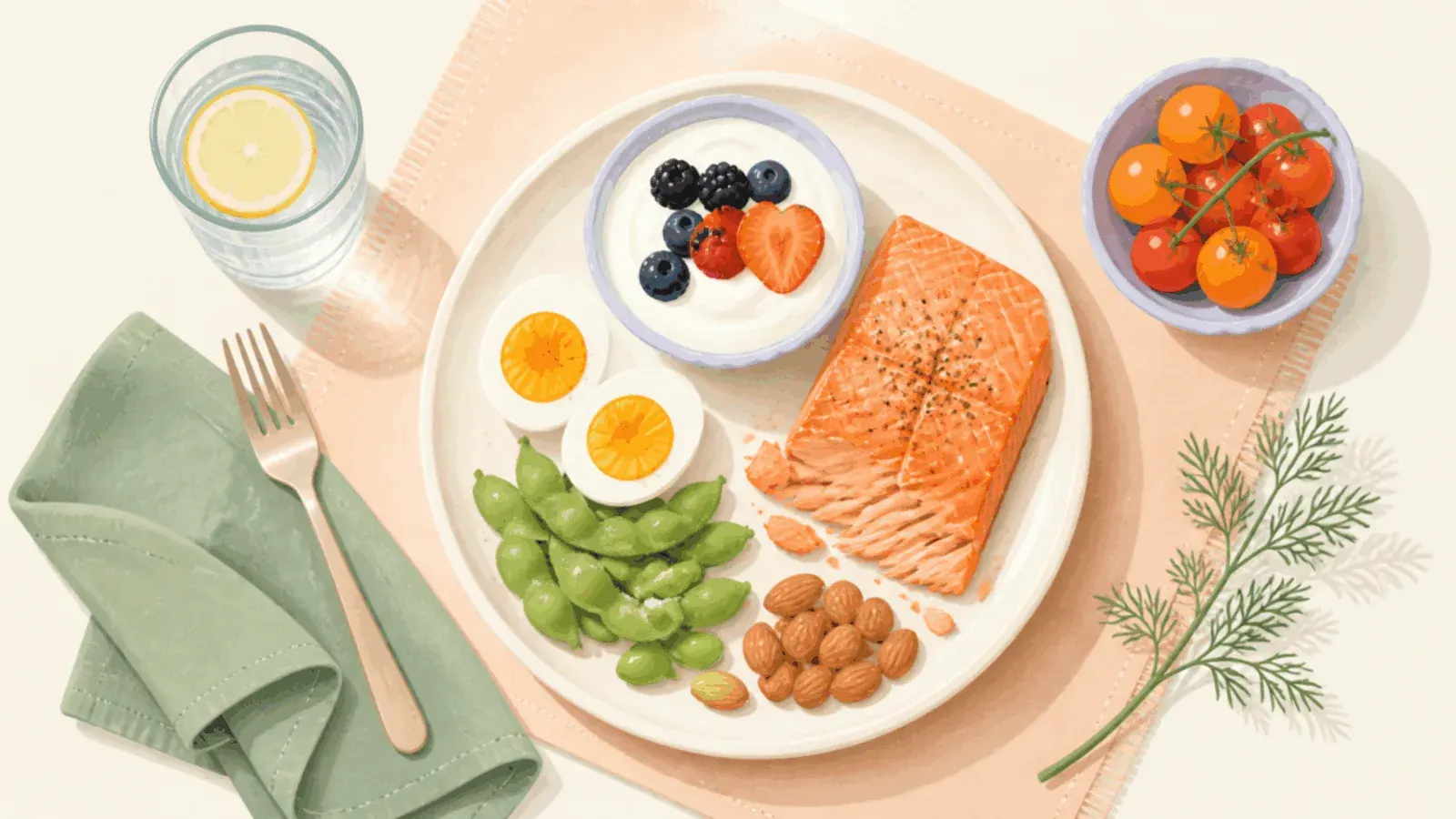
What to eat on a GLP-1 comes down to one habit: with less appetite and less room, lead each meal with protein, then vegetables and fiber, then whole grains or starches if there is space. Some people find several small meals easier than three large plates. Sip water steadily through the day, and set aside foods that feel heavy for lighter options. General wellness guidance, not a prescription.
Key takeaways
- On a GLP-1, low-energy and low-appetite days are common, so it helps to keep a short list of no-cook, protein-forward options ready before hunger or tiredness hits.
- A little batch cooking, like roasting vegetables or cooking a pot of beans, means a balanced plate is mostly assembled in advance instead of cooked from scratch when you're worn out.
- Restaurants, travel, and social meals get easier with simple habits: start with a protein you enjoy, box up extra early, and lean on water-rich starters like broth-based soup or salad.
- Pack portable protein when you're away from home so you're not stuck with only heavy or sugary choices, and remember social meals are about connection, not cleaning your plate.
- This is general wellness information, not medical or nutrition advice. For personal targets or any persistent discomfort, check with your healthcare provider or a registered dietitian, and use GLP-1 Tracker's photo meal scan to notice your own patterns over time.
Protein first
When you only have room for a few bites, starting with protein helps each meal carry more of what your body is looking for. It's a simple habit to build, one plate at a time.
Balance the plate
Think protein, then colorful vegetables, fiber, and a little healthy fat. A balanced plate feels steadier and more satisfying than grazing on whatever's nearby.
Sip steadily
A smaller appetite can mean you forget to drink. Keeping water within reach throughout the day is one of the easiest, gentlest things you can do for yourself.
See your patterns
The app's AI photo scan offers an estimate of calories, protein, and fiber from a quick picture, so you can notice trends without weighing or measuring every bite.
Why protein-first helps when your appetite is smaller
Many people on a GLP-1 notice they feel full faster and stay full longer. That's a real shift, and it changes the math of a meal. If you can only comfortably eat a small portion, what you choose to eat first can matter more than it used to.
A protein-first approach simply means reaching for the protein on your plate before the bread, pasta, or sides. Eggs, Greek yogurt, fish, chicken, tofu, beans, and lentils are all friendly options. The idea isn't to chase a number or follow a strict rule. It's to make sure that when you have a little appetite, you're spending it on food that supports muscle, energy, and feeling satisfied.
Everyone's needs are different, and this isn't a prescription. If you're unsure how much protein is right for you, that's a great question for your healthcare provider or a registered dietitian who knows your full picture.
GLP-1 Tracker visualizes your estimated medication level over time.
Building a balanced plate you'll actually enjoy
A helpful mental image is a plate in thirds, give or take: a portion of protein, a generous serving of vegetables or fruit, and a smaller amount of whole grains or starchy foods. Add a little healthy fat, like olive oil, avocado, or nuts, and you've got a meal that tends to feel steady rather than heavy.
Fiber deserves a special mention. Foods like vegetables, fruit, beans, oats, and whole grains support digestion and help meals feel complete. Introducing fiber gradually and gently is often kinder on the stomach than a sudden jump, though everyone is different.
There's no single perfect meal here. The goal is variety, color, and food you look forward to. Small, satisfying meals you can repeat are often more sustainable than rigid plans you dread.
Hydration, gentle meals, and listening to your body
When appetite drops, thirst cues can fade too. Keeping a water bottle nearby and sipping throughout the day is a quiet win. Some people find that warm drinks, broths, or water-rich foods like cucumber, melon, and soup help them stay hydrated without feeling overly full.
Gentle, slower meals tend to sit better for many people. Eating mindfully, chewing well, and stopping when you feel comfortably full are all simple habits worth practicing. If certain foods feel heavy or don't agree with you, it's fine to set them aside and try something lighter another day.
As always, this is general wellness guidance, not medical or nutritional advice. If you have ongoing stomach discomfort, trouble eating, or anything that feels concerning or persistent, reach out to your healthcare provider. They can help you sort out what's right for your body.
How GLP-1 Tracker helps you stay organized
It's hard to notice patterns you can't see. With GLP-1 Tracker, you can log a meal in seconds by snapping a photo, and the AI scan offers an estimate of calories, protein, and fiber, with a friendly nudge toward protein-first eating. Over time, those small logs add up to a clearer picture of how you're actually eating.
The app also helps you track weight, BMI, and progress photos, lets you log side effects, and keeps your medication schedule and reminders in one calm place, with Otis the otter cheering on your streak. Nothing here replaces your care team. It's simply a supportive tool to help you stay consistent and feel more in control of your day.
Easy meals and snacks for low-energy days
Some days you simply won't feel like cooking, and that's completely normal on a GLP-1. Having a short list of low-effort options ready can take the pressure off when appetite and energy are both low. Think Greek yogurt with berries, a couple of hard-boiled eggs, cottage cheese, a protein shake, hummus with veggies, canned tuna or salmon, edamame, or a handful of nuts with a piece of fruit. None of these require much prep, and most lean protein-first without any math.
A little batch cooking can help too. Roasting a tray of vegetables, cooking a pot of beans or lentils, or grilling a few chicken breasts at the start of the week means a balanced plate is mostly assembled before you're tired and hungry. When you log these quick meals, GLP-1 Tracker's photo scan gives you an estimate of calories, protein, and fiber from a single picture. Estimates are meant as a rough guide rather than an exact measurement, so even a grab-and-go snack still adds to the bigger picture you're building over time.
Eating out, traveling, and social meals
Real life includes restaurants, road trips, holidays, and dinners with friends, and a smaller appetite doesn't have to make those stressful. A few gentle habits help: scan the menu for a protein you enjoy and start there, ask for a box early so a large portion feels less daunting, and remember it's perfectly fine to eat half and save the rest. Water-rich starters like a broth-based soup or a simple salad can ease you into a meal without filling you up too quickly.
Traveling is easier with a small stash of portable protein, like a shake, jerky, roasted chickpeas, or a protein bar, so you're never stuck with only heavy or sugary options. Social meals are about connection as much as food, so there's no need to clean your plate to enjoy the moment. Snapping a quick photo to log a restaurant meal in GLP-1 Tracker keeps your habits visible even when you're away from your usual routine. As always, this is general guidance, not medical advice, so bring any specific questions to your healthcare provider or a registered dietitian.
Frequently asked questions
What should I eat first on a GLP-1?
Many people find it helpful to start with protein, since a smaller appetite can mean each bite counts more. Foods like eggs, yogurt, fish, chicken, tofu, beans, and lentils are popular choices. This is general guidance, not a medical rule, so check with your provider or a dietitian about what's right for you.
How much protein do I need on a GLP-1?
There's no one-size-fits-all answer, and your needs depend on your body, activity, and overall health. A protein-first habit at each meal is a simple starting point, but the specifics are best discussed with your healthcare provider or a registered dietitian.
What foods are easier on the stomach with a smaller appetite?
People often find gentle, lighter options like yogurt, eggs, soups, broths, oatmeal, lean proteins, and cooked vegetables sit comfortably. Eating slowly and in smaller portions can help too. If certain foods consistently bother you or you have persistent discomfort, talk with your provider.
Do I need to count calories on a GLP-1?
Not necessarily. Some people prefer to focus on balanced, protein-first plates and steady hydration rather than strict counting. GLP-1 Tracker's photo scan can offer an estimate of calories, protein, and fiber, so you can notice patterns without weighing every meal. What works best is a personal choice you can talk through with your care team.
How do I stay hydrated if I'm not very hungry?
Keep water within reach and sip throughout the day, even when you don't feel thirsty. Warm drinks, broths, and water-rich foods like melon, cucumber, and soup can help. If you're struggling to drink or eat enough, reach out to your healthcare provider.
What are good protein options if I'm vegetarian or plant-based?
Plenty of plant foods are protein-forward and gentle to keep on hand, including tofu, tempeh, edamame, beans, lentils, chickpeas, Greek-style or soy yogurt, and pea or soy protein shakes. Pairing a few of these across the day helps protein add up even when appetite is small. Everyone's needs differ, so a registered dietitian or your healthcare provider can help you set a target that fits you.
Should I eat smaller meals more often or stick to three a day?
There's no single right answer. When your appetite is smaller, some people find that several small meals or snacks across the day are easier to manage than three large plates, while others prefer a regular rhythm. The aim is to comfortably get in balanced, protein-forward food overall, not to follow a fixed schedule. GLP-1 Tracker lets you log meals whenever you eat, so any pattern you choose still adds up to a clear daily view. For guidance specific to you, your healthcare provider or a registered dietitian is a good resource.
Can I drink alcohol on a GLP-1?
Whether alcohol is appropriate for you is a question for your healthcare provider or pharmacist, since it depends on your health, your medication, and other factors. As general comfort information, some people notice alcohol affects them differently or that hunger and fullness cues feel changed. This isn't medical advice, so please check with your provider for guidance specific to your situation.
Make every bite easier to track
Download GLP-1 Tracker to log meals with a quick photo, keep protein front and center, and stay organized with reminders, progress tracking, and a little encouragement from Otis.
Reading on a desktop? Scan to open it on your iPhone.apps.apple.com/app/id6765520636
This page is for general education only and is not medical advice, diagnosis or treatment. GLP-1 Tracker is a tracking tool, not a medical device. Always consult your healthcare provider about your medication, dosing and health decisions. Brand names are trademarks of their respective owners and are not affiliated with this app.