Protein on a GLP-1: Why It Matters and How to Hit Your Targets
When your appetite shrinks, every bite carries more weight. Here's a calm, practical look at why protein tends to take the spotlight during GLP-1 weight loss, and how GLP-1 Tracker helps you stay on top of it, one meal at a time.
· Educational content — not medically reviewed
The short answer
Protein on a GLP-1 matters more than usual because appetite drops sharply while the body's need for amino acids does not, and weight lost without enough protein is more likely to include muscle. The common general guidance is to build every meal around a protein source and eat that part first. Individual targets vary with body size and health, so ask your provider or a registered dietitian.
Key takeaways
- When your appetite is smaller, spreading protein across several small meals and snacks is often easier than trying to land your whole target in one or two sittings.
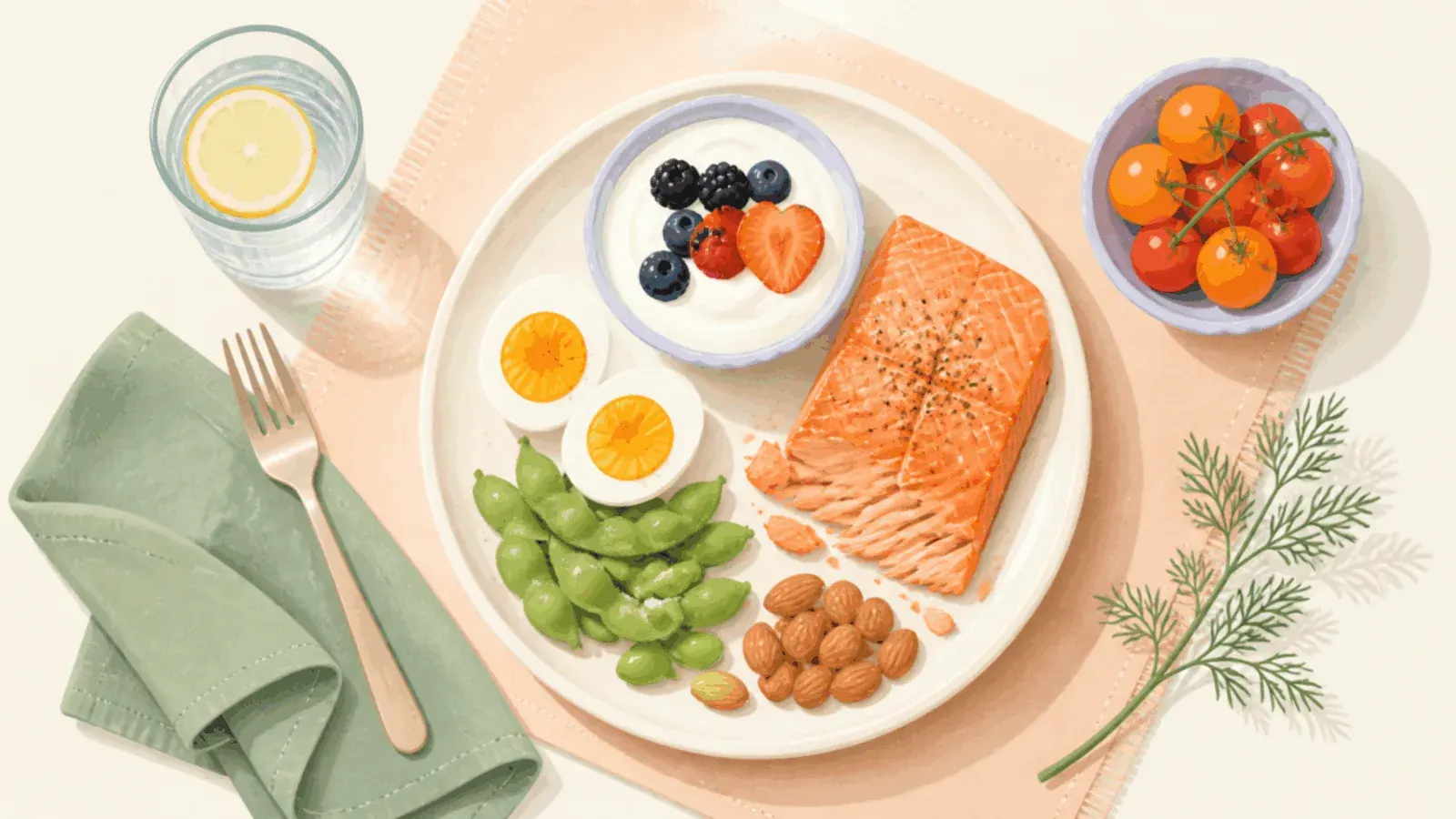
- More concentrated sources, such as Greek yogurt, eggs, fish, poultry, tofu, cottage cheese, or a shake, deliver more grams per bite, which helps when you can only manage a little.
- Adequate protein paired with strength or resistance activity is a common approach people discuss for supporting lean mass during weight loss, though any specific plan should come from your own provider.
- GLP-1 Tracker's AI photo meal logging estimates calories, protein, and fiber, so you can watch your running protein total build through the day.
- These are educational pointers, not medical or nutrition advice; talk with your provider or a registered dietitian about targets that fit your situation.
Protein-first photo scan
Snap a photo of your meal and let our AI estimate calories, protein, and fiber, with protein shown front and center so you always know where you stand.
See your daily total at a glance
Log meals as you go and watch your running protein total build through the day, so it's easy to notice when you're falling behind and plan your next bite.
Fiber tracked alongside
Because fiber matters too when appetite is low, every scan surfaces a fiber estimate next to protein so you can aim for balanced, satisfying meals.
Everything in one calm place
Pair your nutrition log with weight, BMI, and progress photos so your eating habits sit right beside the bigger picture you're working toward.
Why protein gets extra attention on a GLP-1
GLP-1 medications may reduce appetite for some people, which often means eating less overall. That smaller food intake is part of how many people approach weight management, but it also raises a practical question: when you're eating less of everything, are you still getting enough of the nutrients your body relies on?
Protein is the one many experts emphasize during any period of weight loss. Your body uses protein to help maintain lean muscle, and when calories drop, adequate protein is generally considered important for helping preserve that muscle rather than losing it alongside fat. This is general education, not medical advice, and your needs are personal, so your healthcare provider or a registered dietitian is the right person to help you set a target that fits your body, goals, and health history.
GLP-1 Tracker visualizes your estimated medication level over time.
Reaching your targets with a smaller appetite
When you can only eat a little, the order you eat in starts to matter. Many people find it helpful to reach for protein early in a meal, before there's no room left for it. Building a plate around a protein source, then adding fiber-rich vegetables, fruit, or whole grains, is a simple framework a lot of people lean on.
Spreading meals across the day rather than saving everything for one big dinner can also make a smaller appetite easier to work with. So can keeping easy options on hand, like Greek yogurt, eggs, beans, tofu, or a shake, for days when cooking feels like too much.
None of this is a prescription, and what works varies from person to person. If you're struggling to eat enough, noticing nausea, or feeling unsure about your nutrition, that's a conversation worth having with your healthcare provider.
How GLP-1 Tracker helps you stay organized
GLP-1 Tracker is built to make the protein-first approach feel effortless rather than like math homework. Instead of looking up every food, you can take a photo of your plate, and our AI scan estimates the calories, protein, and fiber for you, with protein highlighted because that's usually what's top of mind.
As you log throughout the day, your running total updates so you can see at a glance whether you're on pace or might want to add a little more before bed. Your meals live alongside your weight, BMI, and progress photos, so your nutrition habits connect naturally to the bigger picture.
The app is a tracking and organizing companion, not a medical device, and its estimates are meant to support awareness, not replace professional guidance. For your actual targets and any health questions, your healthcare provider is always the best source.
Spreading protein across the day instead of front-loading one meal
When your appetite is smaller, trying to hit a daily protein target in one or two big meals can feel impossible, and the food often goes uneaten. Many people find it easier to spread protein across several smaller meals and snacks, so no single sitting has to carry the whole load. A few grams at breakfast, a protein-forward snack midday, and a modest dinner can quietly add up to a number that would have felt overwhelming on one plate.
This is where seeing your running totals helps. In GLP-1 Tracker, each meal you log with AI photo logging contributes its estimated protein toward your day, so you can glance at where you stand and decide whether a later snack is worth adding. Watching the total build through the day tends to feel more doable than facing it all at dinner.
Protein quality and concentration when you can only eat a little
Not all protein sources pack the same amount into the same volume. When you can only manage a few bites, more concentrated options, like Greek yogurt, eggs, fish, poultry, tofu, cottage cheese, or a protein shake, can deliver more grams per mouthful than bulkier, lower-protein foods. People also talk about "complete" protein sources, which contain the full range of amino acids the body uses; combining plant foods over the day is a common way vegetarians and vegans cover that range.
There's no single right choice here, and what works depends on your preferences, budget, and any dietary needs, so a registered dietitian or your provider is the best person to help you build a list. GLP-1 Tracker can support whatever you choose: log a meal, see the estimated protein, and learn over time which of your go-to foods give you the most return for a small appetite.
Frequently asked questions
How much protein should I eat on a GLP-1?
There's no single number that fits everyone. Protein needs depend on your body weight, activity level, goals, and overall health, so the best way to set a target is to ask your healthcare provider or a registered dietitian. Once you have a goal in mind, GLP-1 Tracker makes it easy to log meals and see how close you're getting each day.
Why does protein get so much focus during GLP-1 weight loss?
During any weight loss, your body can lose lean muscle along with fat, and protein is widely viewed as important for helping protect muscle while you're eating less. Since appetite is often lower on a GLP-1, being intentional about protein can be especially helpful. This is general information, so talk with your provider about what's right for you.
What does "protein-first" actually mean?
Protein-first simply means eating your protein early in a meal, before a smaller appetite fills up. The idea is to make sure protein doesn't get crowded out. In GLP-1 Tracker, protein is shown front and center in every meal scan, so the protein-first mindset is easy to keep in view.
Can the app tell me how much protein is in my meal?
GLP-1 Tracker uses an AI photo scan to estimate the calories, protein, and fiber in a meal from a picture. These are educational estimates to help you stay aware and organized, not exact lab measurements, so use them as a helpful guide rather than a precise nutrition label.
What if my appetite is so low I can't eat enough protein?
A very low appetite can make protein hard to reach, and that's a common experience worth taking seriously. Approaches like protein-first meals, smaller frequent meals, and easy options such as shakes or yogurt work for some people. If eating enough feels genuinely difficult, please bring it up with your healthcare provider, who can offer guidance tailored to your situation.
Does protein help protect muscle while losing weight on a GLP-1?
Adequate protein, often paired with strength or resistance activity, is a strategy many people use to help support muscle and lean mass during weight loss, since rapid weight loss can affect muscle as well as fat. This is general education, not a guarantee or a prescription. Your provider or a registered dietitian can help you figure out a protein amount and activity approach that fits your body and goals.
Are protein shakes or bars a good way to hit my target?
For a lot of people on a GLP-1, a shake or bar is an easy way to add concentrated protein when chewing a full meal feels like too much. They're one tool among many, not a requirement, and products vary widely in protein, sugar, and other ingredients, so it's worth reading labels and checking with your provider or dietitian about what fits your needs. If you do use them, you can log them in GLP-1 Tracker so they count toward your daily protein total alongside your meals.
What's the difference between hitting my calorie goal and hitting my protein goal?
They measure different things. Calories track your overall energy intake, while protein tracks a specific nutrient that supports muscle and can help you feel fuller. On a GLP-1, it's common for calories to drop naturally with a smaller appetite, which can make it harder to reach your protein number even when you're eating less overall, so many people keep an eye on both. GLP-1 Tracker estimates calories, protein, and fiber from your meal photos so you can see both at once and not let protein slip while calories fall.
Make every bite count with GLP-1 Tracker
Snap your meals, watch your protein add up, and keep your whole journey in one calm place. Download GLP-1 Tracker for iOS and take the guesswork out of staying organized.
Reading on a desktop? Scan to open it on your iPhone.apps.apple.com/app/id6765520636
This page is for general education only and is not medical advice, diagnosis or treatment. GLP-1 Tracker is a tracking tool, not a medical device. Always consult your healthcare provider about your medication, dosing and health decisions. Brand names are trademarks of their respective owners and are not affiliated with this app.